
Deepfake Detection in the Insurance Industry

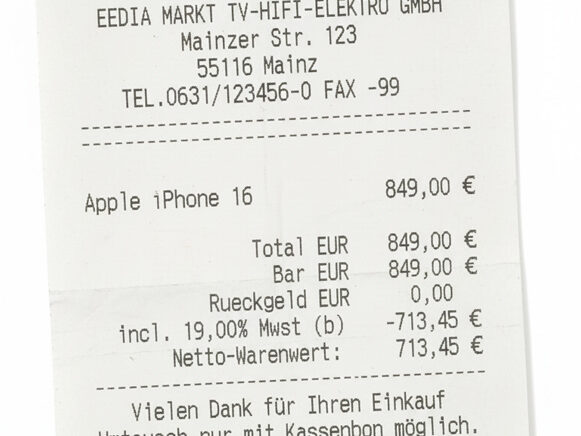
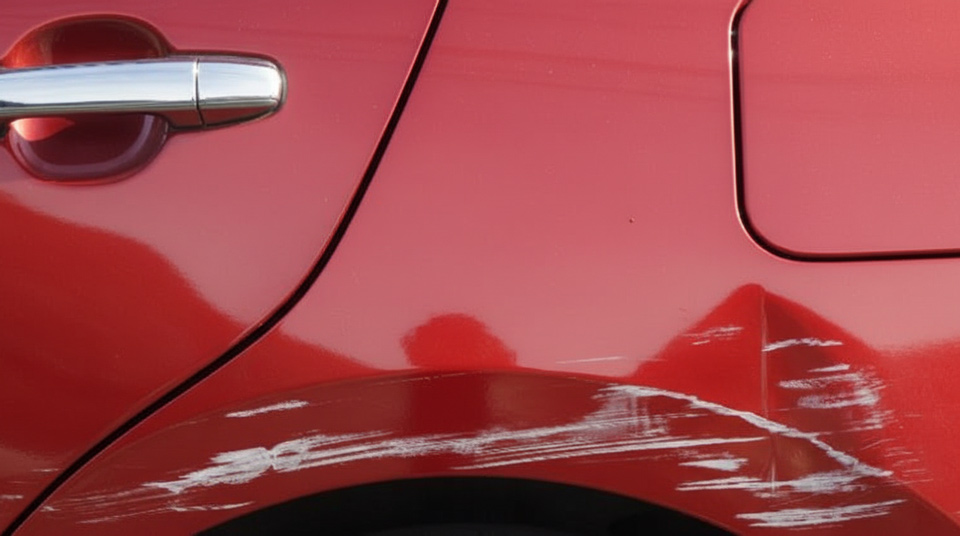
Insurance fraud costs the German insurance industry more than six billion euros each year — with generative AI models acting as a catalyst. From manipulated claims images and forged repair invoices to fully staged accident scenarios, digital transformation has given fraudsters an entire new range of tools. It is high time insurers deployed equally powerful tools to curb these increasingly automated fraud attempts.
Fraud Has Many Faces — Not Just Deepfakes
When people talk about deepfakes, most think of hyper-realistic videos in which individuals appear to say things they never actually said. For example, Eckart von Hirschhausen has sued Meta after videos circulated in which he allegedly promoted “diet pills.” The outcome of the proceedings — in which he is seeking to have Meta proactively block or remove further videos of this kind — is still pending.
Images and Video Alone Are No Longer Proof
In an insurance context, multimedia manipulation has been around for a long time and comes in many forms. Classic fraud cases range from deliberately caused car accidents to staged damage and theft, all the way to inflated invoices. Any claims handler could probably write a book about attempted fraud.
With advanced image-editing software and AI tools, however, fraudsters can now act far more subtly. They create deceptively realistic claims images, manipulate vehicle data, or stage accidents and present forged dashcam footage as “evidence.”
It becomes particularly critical when falsified documents enter the picture: repair invoices, expert reports, purchase receipts — all of these can be forged so convincingly with modern software that even experienced claims handlers may not spot them at first glance. This problem is evolving into dimensions few would have expected:
A Deepfake in Less Than 40 Seconds ➔
See how easily existing images can be manipulated using AI with just a short prompt.
Fraud is on the Rise
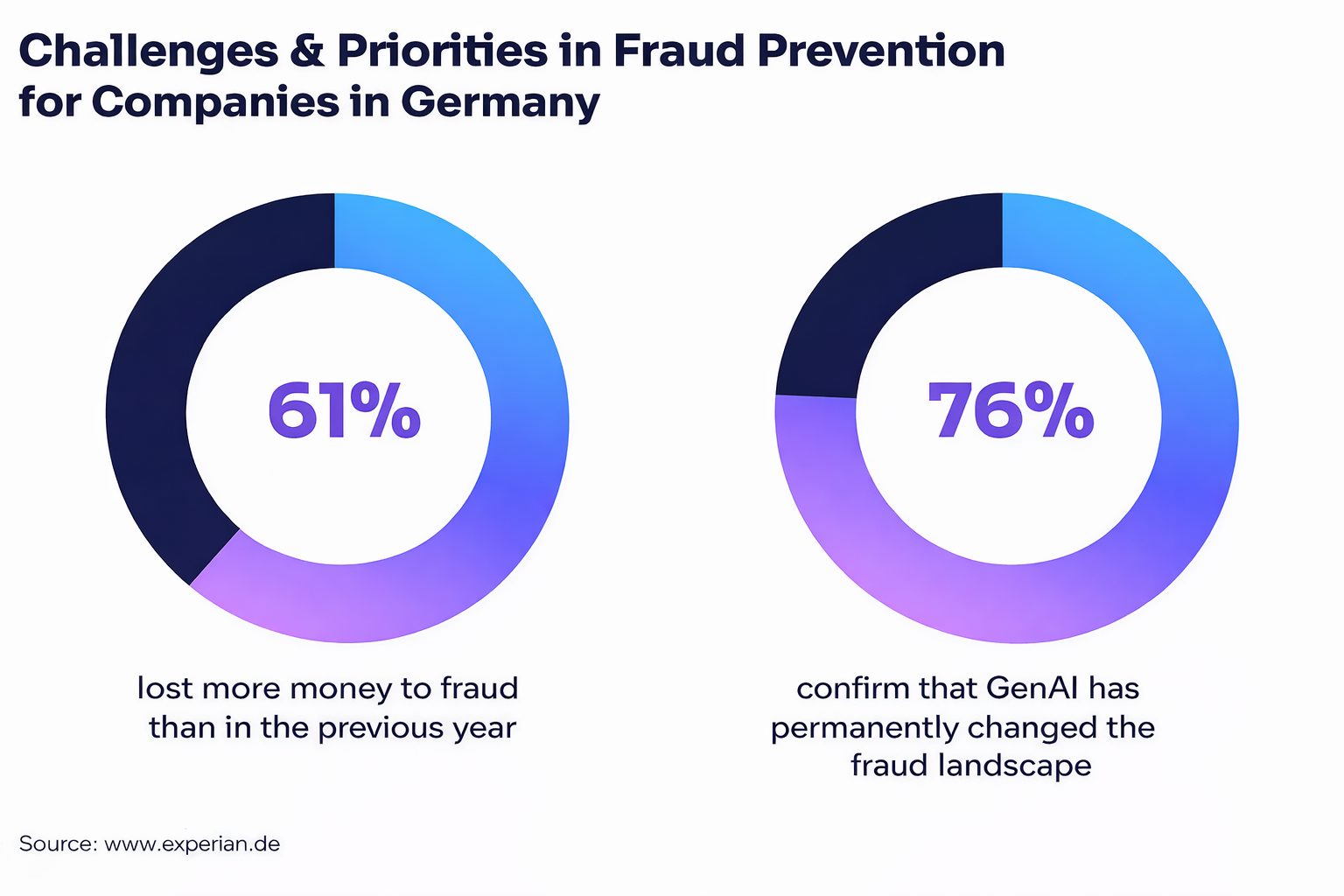
A February 2025 study by Experian found that 61% of German companies lost more money to fraud in 2024 than in the previous year. 76% of German respondents believe that GenAI has permanently changed the fraud landscape. Beyond the insurance industry, the entire “Know Your Customer” space — i.e., digital identity verification — is becoming a prime target for fraud involving generative AI.
Documents in Focus: More Than Just Images
While deepfake videos receive a lot of media attention, much of the fraud in the business world takes place at the level of images and documents. Insurers are not only dealing with manipulated images, but also with forged PDFs, edited screenshots, and recycled images from previous claims. A claims image, for example, may be taken from the internet, supplemented with metadata, and submitted as supposedly current evidence. Or a genuine image is digitally edited after the fact to make the extent of the damage appear greater.
Alongside the classic manipulations that have been known for years (including passing off old images as new or “inflating” damage after the fact through image editing), entirely new areas are emerging, particularly partial manipulation of images and/or documents.
Today, it is easy to generate an authentic-looking damage image with the “right” background by simply generating the damage into an existing object.

The Multi-Billion-Euro Bill:
Why Insurers Need to Act Now!
The broader economic environment, with rising prices and declining purchasing power, is also affecting insurance companies. As a result, even if claims statistics remain unchanged (according to the GDV, around 10% of all submissions), overall costs increase. The insurance industry is therefore under pressure from multiple directions.
Insurance Fraud Is Not a Trivial Offence
Insurance Fraud Is Not a Trivial Offence
In light of these developments, one thing is clear: insurers can no longer afford to rely on manual checks and gut instinct. Multimedia forensics, the systematic analysis of digital images, video, and documents, is becoming a strategic necessity.
A legal aspect also comes into play here. Normally, insurers must prove attempted fraud or its execution. However, if there is a well-founded suspicion of fraudulent intent, what is known as a reversal of the burden of proof may apply. In that case, the insured must demonstrate that they did not commit fraud. Forensic expert assessments can provide a decisive advantage here and save substantial resources that would otherwise be spent handling suspicious claims.
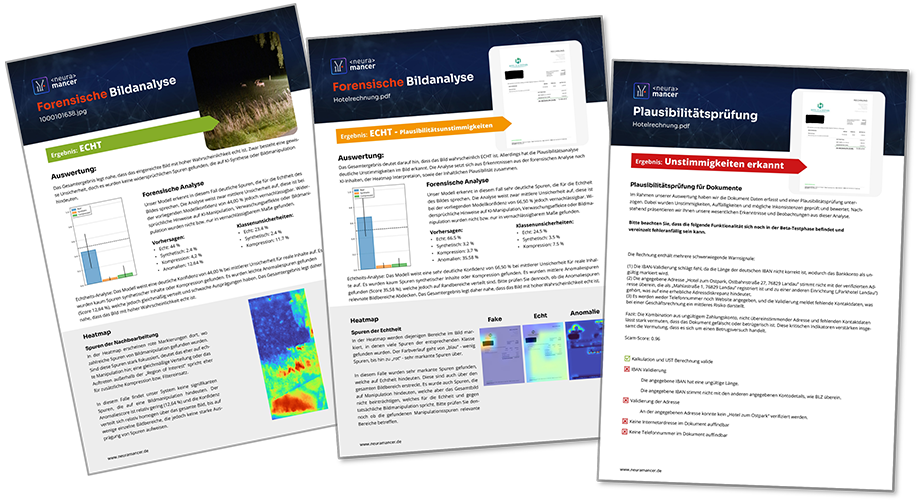
What matters most is the explainability of the results. Especially in the highly regulated insurance environment, it is not enough for a system to simply flag “manipulation detected”. It must be transparent why an image or document is suspicious, which features indicate tampering, and how likely a forgery is. Bayesian neural networks offer an advantage here: they provide calibrated confidence scores that can be integrated directly into automated review processes and give claims handlers a sound basis for decision-making.

Automation Meets Compliance
Integrating forensic image analysis into existing claims management systems offers several advantages. First, suspicious cases can be automatically screened at the point of first notification (FNOL, First Notice of Loss). This saves time, reduces manual review effort, and allows teams to focus on truly critical cases. Second, repeat offenders can be identified more effectively when patterns can be analysed across multiple claims.
At the same time, such systems must meet the strict requirements of the GDPR and other data-protection regulations. Sensitive customer data must not be processed without appropriate safeguards, and the ability to explain algorithmic decisions is essential, especially in an insurance context. Solutions built from the ground up with compliance and explainability in mind offer a clear competitive advantage, not only against fraudsters, but also in meeting regulatory requirements such as the AI Act.
Robustness and Continuous Training
The threat landscape is constantly evolving. What is considered a state-of-the-art forgery today may be standard tomorrow. This is why systems are needed that are not static, but are continuously trained and improved using new data. In-house research capabilities make it possible to update models on an ongoing basis and respond to new manipulation techniques.
In addition, manipulation detection tools should focus on physical traces rather than content-based patterns, because semantic errors in image content, such as the famous “six fingers” early AI generators sometimes produced, are increasingly disappearing.
Insurers that invest early in robust multimedia forensics gain an advantage. They can not only uncover current fraud cases, but are also prepared for future threats. This protects not only their own bottom line, but also the premiums of honest customers and trust in the industry as a whole.

Trust Through Transparency
In the end, deepfake detection and multimedia forensics are not only about preventing losses, but about trust. Insurers that can transparently demonstrate they have reliable review mechanisms strengthen their credibility with customers, regulators, and partners. The combination of technical robustness, scientifically grounded methodology, and regulatory compliance creates a foundation where honest customers are treated fairly and fraudsters are effectively detected and deterred.

Would you like to learn more about multimedia forensics in an insurance context?
At Neuramancer, we develop technologies that systematically assess manipulation in image, video, and audio and reliably uncover it.
Book an expert consultation now!